


Power Outage Annex
This annex outlines procedures for maintaining safety and continuity at
Stanford during a sustained loss of electrical power. It details backup
power protocols, critical system prioritization, and communication
strategies for staff and students. Emphasis is placed on protecting life
safety systems, safeguarding research and patient care operations, and
coordinating with utility providers.

Active Threat Annex
This annex provides guidance for response to an active threat, such as an
individual with a weapon on or near campus. It includes phases of response
and roles and responsibilities for all units. The plan also addresses
internal communication strategies, reunification procedures, and continuity
of critical functions. Regular training and exercises ensure staff are
familiar with response roles and safety procedures.

Disaster Medical and Behavioral Health Annex
This annex supports coordinated medical response and psychological first aid
during large-scale emergencies. It addresses surge capacity, triage
protocols, and the integration of mutual aid and public health partners.
Behavioral health support is emphasized for both immediate crisis response
and long-term mental health needs of staff and impacted individuals. Special
consideration is given to vulnerable populations and continuity of essential
clinical services.
preparedness@lists.stanford.eduto request this document.

SU Wildfire Preparedness & Evacuation Guide
This public document gathers information and resources for anyone on or
around Stanford’s historic campus to better prepare for a wildfire
emergency. It includes information on county emergency alert systems,
understanding county evacuation zones, resources on monitoring wildfires
when they occur, and more.
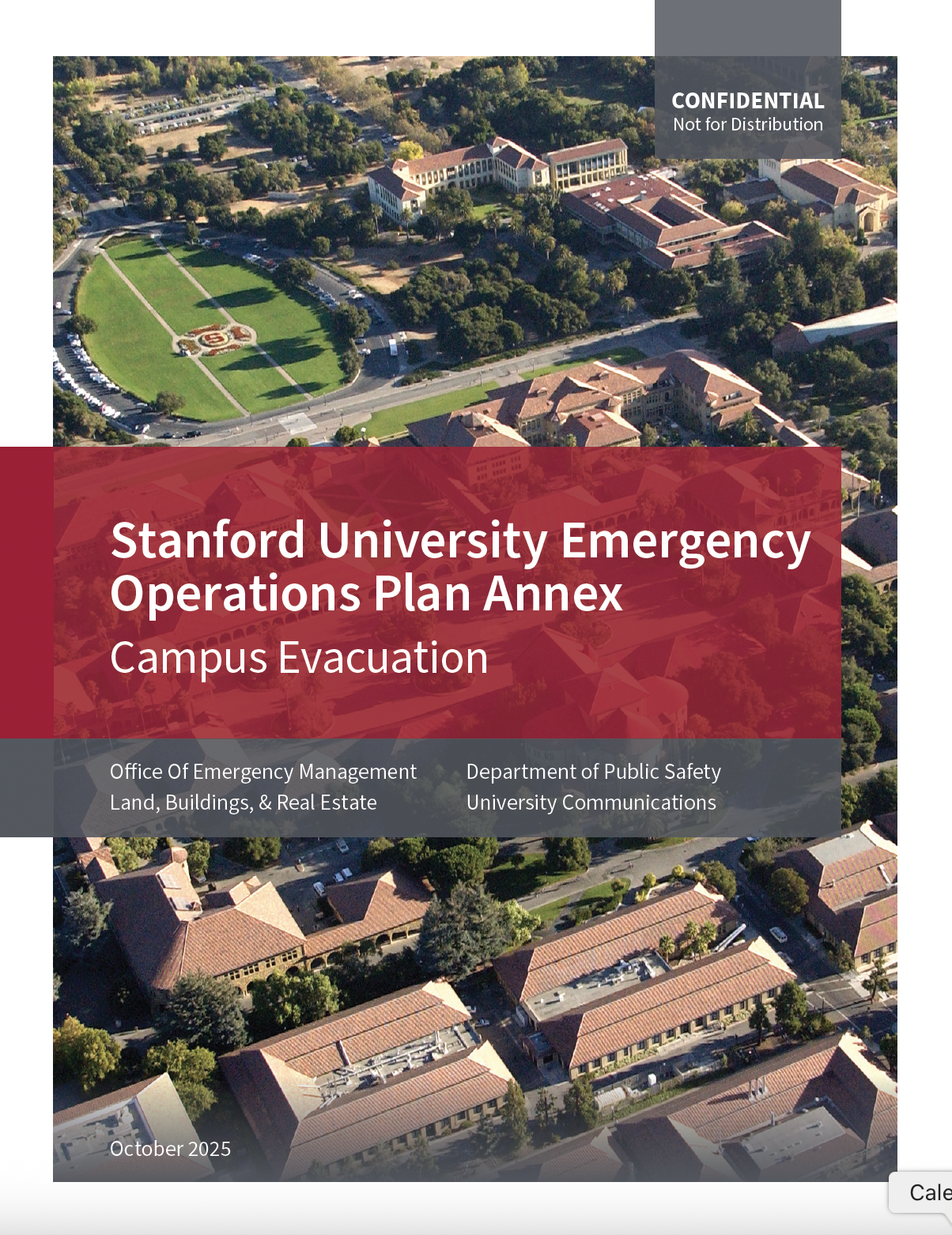
Campus Evacuation Annex
This annex provides a framework for managing partial or complete evacuations
of Stanford’s main and Redwood City campuses in response to hazards such as
wildfire, hazardous materials releases, or dam failure. It establishes
evacuation zones, notification protocols, and transportation coordination
for the campus community. The plan addresses mass care services,
accessibility needs, and procedures for re-entry and repopulation. Special
consideration is given to children in university care, students without
personal transportation, and individuals with access and functional needs.
